

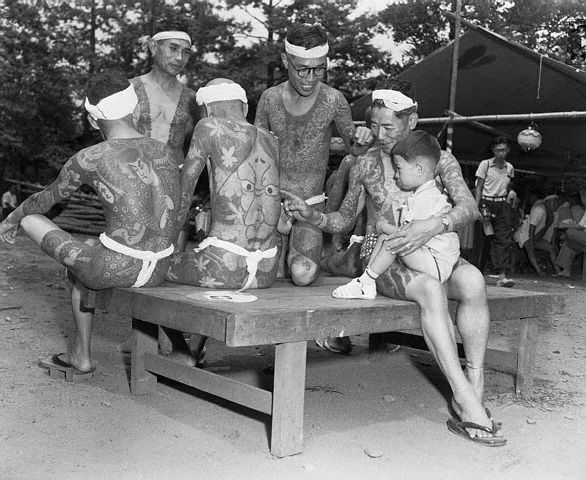
Although everyone seems to know of them, not much is known about the Yakuza’s greatest connection, Tattoos. Nowadays, the general public has become more accepting of tattoos, in general. Gone are the days when tattooed people were shunned by society, but apparently, Japan hasn’t gotten the memo yet.
What is Irezumi you ask? The common term for Japanese tattoo art is irezumi (入れ墨), meaning to insert ink. This refers to the Japanese tattooing tradition of inserting ink beneath the skin to form the tattoo. Irezumi tattoos derive inspiration from Japanese folklore and mysticism. The most common tattoos are Koi Fish, Samurai, Dragons, and Oni.
Read on to learn more about the different irezumi tattoo designs and the specific meanings attached to each of them.
Yakuza organizations go way back to the Edo period (1603–1868). Though history and diversification have modified what it means to be a Yakuza member. They are primarily made up of the people who are from the lowest classes in society, from the Tekiya (peddlers of stolen, smuggled, or illegal goods) who started it all during the ancient times, to the Bakuto (gamblers), up until the misfits and hoodlums of the more modern ages.
In the beginning, tattoos weren’t really a thing in the Yakuza world yet because they were associated with illegal foreigners (often, of Chinese descent) or criminals, who were tattooed to mark them for life and make their lawless history (or non-Japanese status) known to all. With many of them being criminals themselves, the Yakuza gradually turned this notion on its head and turned tattoos into badges of honor to take pride in. As time went by, they increased in popularity and influence. Several different factions sprung up and soon enough, the atmosphere became pretty competitive.
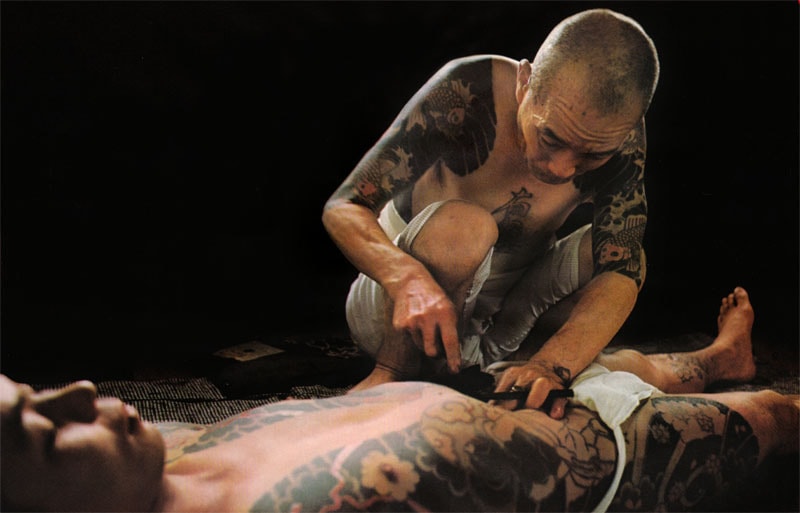
Similar to the gang tattoos of today, their ink became a means to identify their allegiances and the crimes they’ve committed. As we all know, getting a tattoo can be very painful. To make matters worse, Yakuza tattoos are done the old-fashioned way in a process called Irezumi (入れ墨), which means ‘inserting ink’. It’s done manually without the use of anything but a bamboo stick with a sharp needle attached to the end of it. Sitting through one of these sessions must have required a high tolerance to pain because the designs are usually opaque, involving a lot of spaces that are completely filled in with solid color.
Imagine being poked with a small needle again and again, and not being allowed to flinch, lest the tattoo be ruined. Now, imagine having your full body done, and being inked from your shoulders to your ankles. Ouch! The tough and manly aspect was another thing that drew them in to the whole culture, and it was very time consuming too. They say a full bodysuit, when done in weekly sessions, can take anywhere from 1-5 years, depending on how detailed it is. That’s practically a college degree! It’s probably going to cost like one too. We all know that time means money, and being able to afford a bodysuit was also seen as a sign of success and accomplishment.
Given the taboo nature of their profession, Irezumi artists were also ostracized and had to rely on word of mouth of previous customers. This must’ve been a tough gig in an era before wireless communication and online reviews. It can make quite an interesting job, though, because there’s so much more to it than picking a design from a catalog and transferring it onto someone’s skin. Most older Yakuza even dislike calling them ‘tattoos’ because they feel like it has a shallow connotation like they’re merely done because they’re trendy.
Irezumi tattoos are extremely personal and although they might have popular themes, it’s practically impossible to have two individuals with the exact same design. Artists dig deep into the history of their clients and include stages in life well before being part of the Yakuza.
The tradition in itself, when viewed separately from the violent and skewed beliefs of the Yakuza, is undoubtedly an awe-inspiring art form that is filled with depth and meaning.
The Specifics Of Irezumi
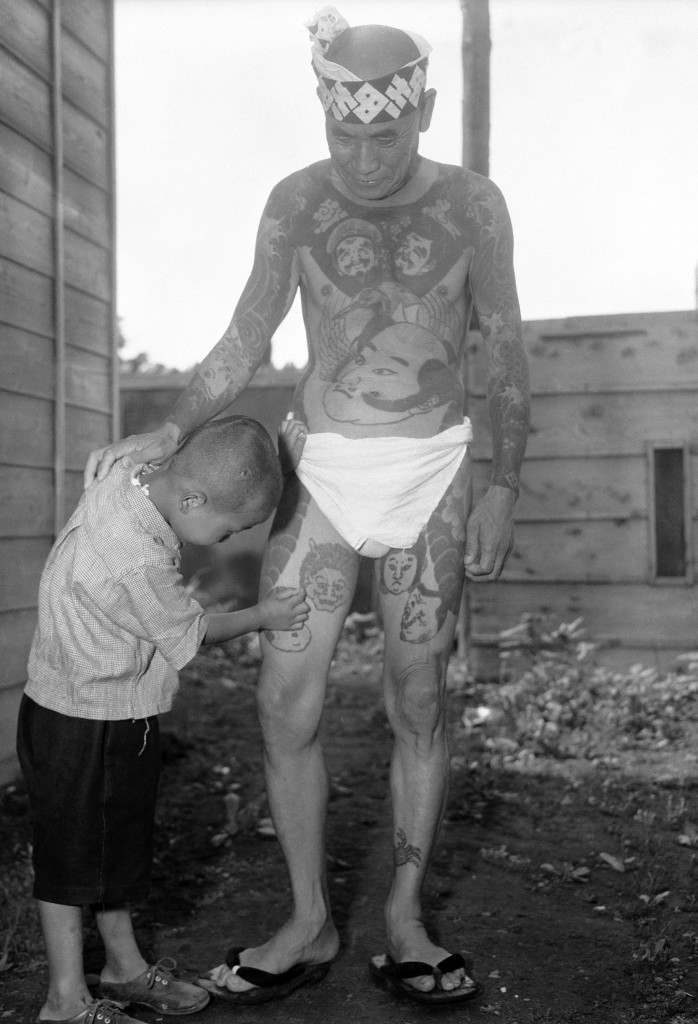
Traditionally, the entire body aside from the head, neck, hands, feet, and an approximately 3-inch wide vertical line down the torso is tattooed in a Munewari Sōshinbori (胸割り総身彫り) or bodysuit fashion. Extremities are left blank so that the person can conceal his tattoos with a long-sleeved shirt and trousers. Now, you may be wondering what the vertical gap down the torso is for. It’s actually done so they can unbutton their shirts without exposing any ink. Ain’t that crafty?
It’s sort of amazing to think that a person so heavily-tattooed can look so inconspicuous and live a ‘regular’ life alongside the unknowing tattoo-phobic public. Take note that by no means are they ashamed of their tattoos, on the flip side, they hold these road maps of their lives to such high regard that only those closest to them can look at. If you had your entire life documented on your skin, you would naturally want to maintain some level of privacy and only show it to people who matter to you.
Inner arms and or underarms were often left blank for two primary reasons. First, the skin around that area is one of the most tender and sensitive, therefore the most painful place to get a tattoo. It’s also dangerous and prone to infection because of the irritation around the sweat glands. Try pinching yourself a couple of times around that area to see for yourself how sensitive it is. Second, criminals were tattooed in their inner arms as the aforementioned method of identifying them and casting them out of society. People left the area blank to show others that they got tattoos on their own free will and not because they wanted to cover up a tattoo they got in prison.
If a design only has the line work done, meaning it hasn’t been filled in with color yet, it’s actually meant to be that way for now. This practice is called Sujibori (筋彫り) and it’s unfinished precisely because the narrative behind the tattoo hasn’t been fully-realized yet.
Red tattoos were the manlier choice. In earlier days, Nara black and red was practically the only color options available, but red was especially macho because it contained toxic substances. Not the brightest idea unless you think infections are cool. Nowadays, this doesn’t really hold true anymore because pigments are more regulated, and tattooing practices have changed very much since then.
There are many different motifs and themes that make up what Japanese tattoos are all about. These themes include religion, folklore, and natural beauty. Although there are over a thousand different variations, here’s a list of some of the most popular designs people go with, and their meaning.
There are many different motifs and themes that make up what Japanese tattoos are all about. These themes include religion, folklore, and natural beauty. Although there are over a thousand different variations, here’s a list of some of the most popular designs people go with, and their meaning.
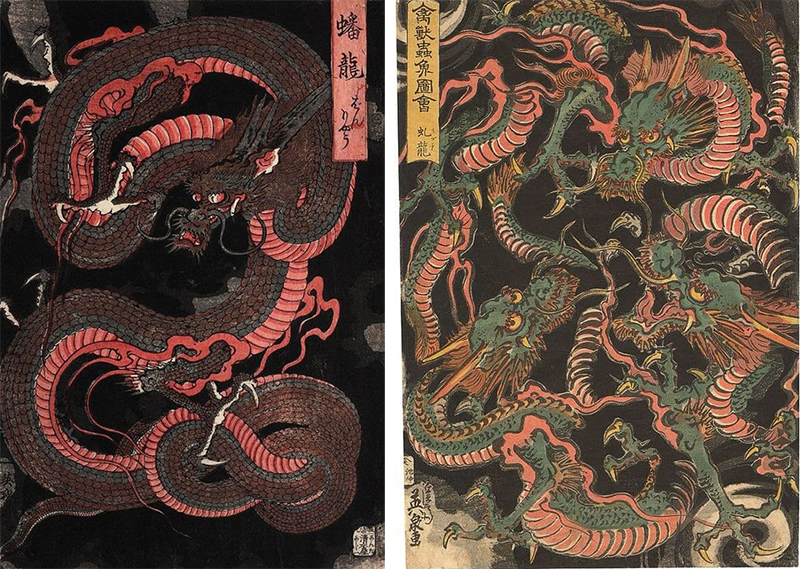
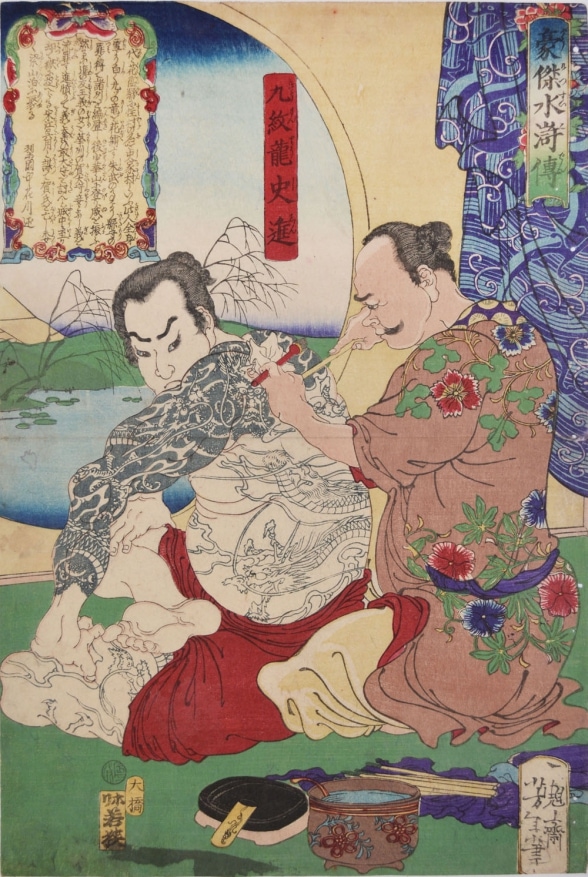
Dragon (龍; Ryu)
I think it’s safe to say that dragons are considered cool in every country, but they actually aren’t cool in Japan. Just kidding. They are beloved and revered mythical creatures who are all-powerful creatures that fuse together the forces of a serpent’s flexible body, the koi’s hard-wearing scales, the eagle’s formidable claws, and the mighty deer’s horns. With all this strength, they aren’t portrayed as savage beasts, but as wise protectors of humanity. Dragon tattoos are seen more as companions to protect the person against evil spirits and evil people. They are usually done in black, but can come in a variety of colors—green (natural), blue (gentle and forgiving), yellow (nobility), and gold (righteousness). Japanese dragons have three claws, most of the time, unlike Chinese ones that have four or five. Originating from the Edo Period, firefighters most commonly had these tattoos as they thought it protected them from fire. The firefighters of the Edo Period were a very tough group, and shared similarities with the Yakuza lifestyle.
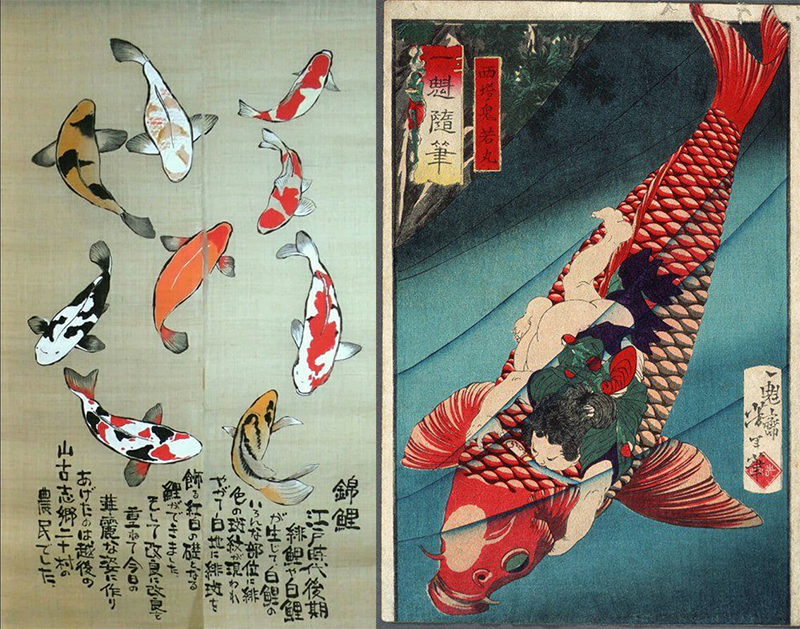
Koi Fish (錦鯉; Nishikigoi)
Koi, short for Nishikigoi, is a species of carp that is prized, first and foremost, for its exquisite patterns. They’re believed to bring prosperity and good fortune, so households often have them as pets. But more than being physical beauty, they are very strong and resilient creatures who are able to swim upstream through rough currents. Legend has it that they’re even able to swim up waterfalls. Chinese folklore even speak of koi that transform into dragons! Doesn’t it remind you of how Magikarp evolves into Gyarados? Oddly enough, you can learn so much about Japanese culture from Pokémon.
This King of the River Fish is a popular motif because it represents having the strength to get through adversity, and if you think about it, Yakuza members have most probably gone through at least one rough patch in their lives due to poverty, even before being part of the Yakuza.
Tattoos are usually done in black, but having a red one can stand for strong brotherly love for one’s faction too. The koi is usually oriented in an upward or ascending position and is accompanied by waves, as water connotes resilience and the wave of life.
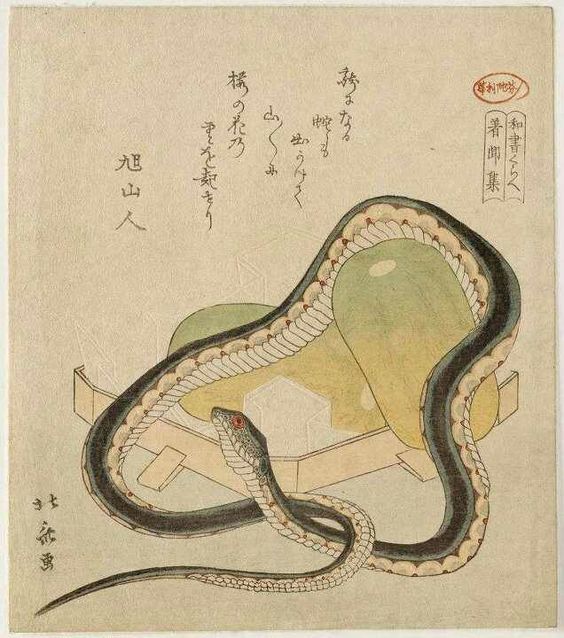
While being called a snake is never a good thing, the Japanese also see snakes as very wise creatures. Much of this is influenced by Chinese beliefs, which is a common theme in almost all of the motifs in this list. The Chinese zodiac says that people born in the year of the snake are highly intellectual and philosophical. Additionally, because snakes periodically shed their skin, they also denote healing, regeneration, good health and even immortality.
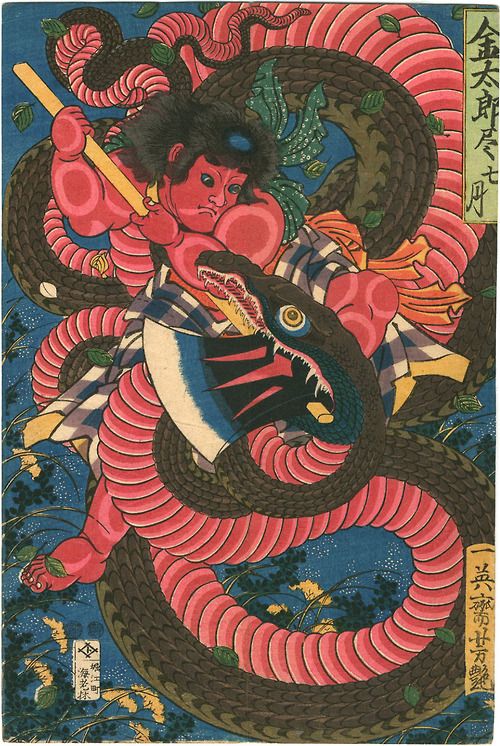
Kintarō (金太郎; ‘Golden Boy’)
This ‘golden boy’ was named this way more for his superhuman strength than the color of his skin. The stuff of legend, Kintarō was said to actually have truly existed during the Heian Period (794 – 1185), smashing rocks, bending and uprooting trees, wrestling bears, and battling demons from a very young age. He was also believed to have been the guardian of a samurai named Minamoto no Yorimitsu later on in his life. He is often rendered with red skin and wrestling a giant black koi.
Kintaro is chosen as a tattoo to either impart his legendary strength to the person or serve as a guardian, as he did to the samurai.
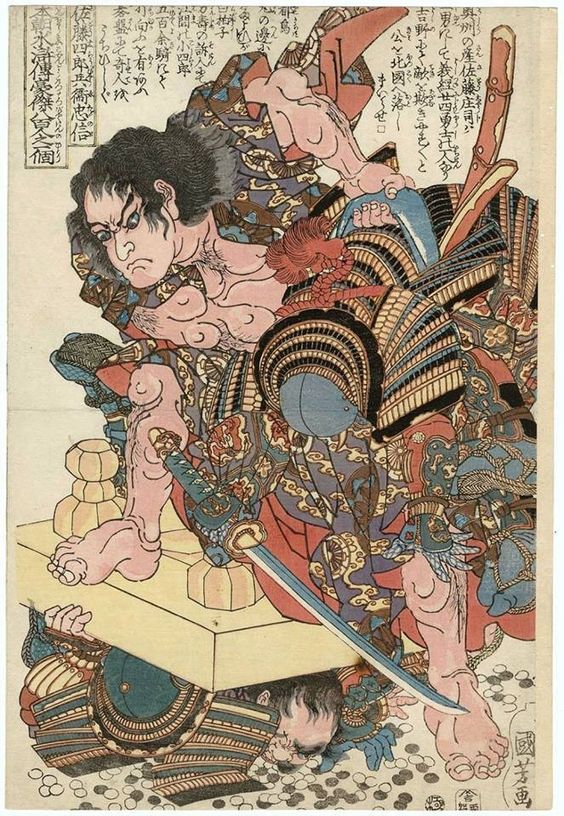
Samurai (侍)
Although Samurais used to be adversaries of the Yakuza because the former lived a virtuous life, while the latter chose the life of crime, Samurais have become a popular tattoo choice among the Yakuza because they believe that they embody the way of the warrior (武士道; Bushido) and its 8 virtues of righteousness (義; gi), heroic courage (勇; yū), benevolence / compassion (仁; jin), respect (礼; rei), honesty (誠; makoto), honor (名誉; meiyo), duty / loyalty (忠義; chūgi), and self-control (自制; jisei). All this can sound pretty ironic, but another reason for this could be because some Samurais actually became Yakuza and wanted to acknowledge their prestigious past.
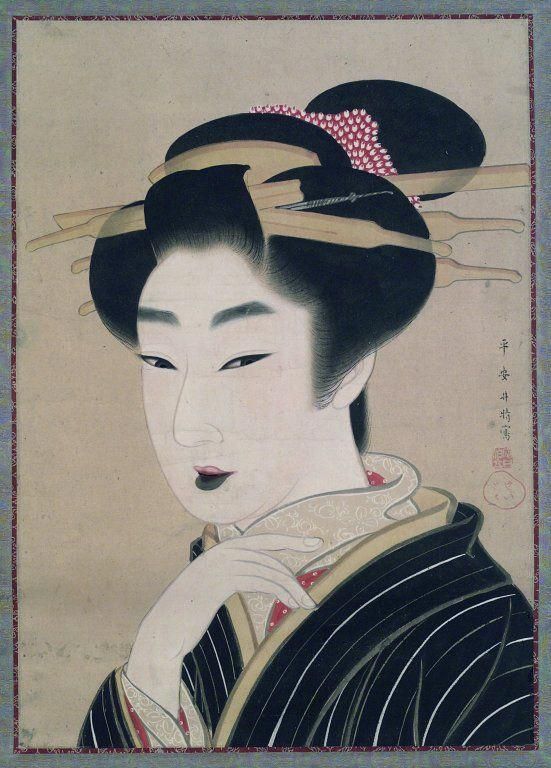
Geisha (芸者)
Geisha are ancient Japanese performers who are highly-skilled in dancing, singing, and the arts. Not to be mistaken for prostitutes as they often are outside Japan, tattoos of these alluring entertainers embody fertility, good fortune, and tradition.
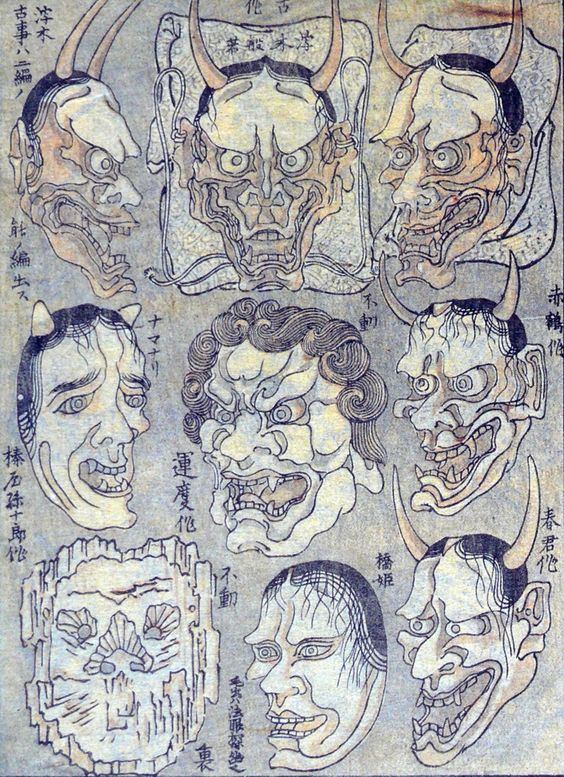
Oni Mask (鬼)
Personally, I don’t think Oni masks are the best tattoos to have just because their bulging eyes and aggressive expression can be a shocking thing to see on a mirror when you wake up in the morning. Well, maybe that’s part of why its chosen in the first place. An Oni is a fierce-looking demon or ogre with horns, fangs, and tusks. They consume human flesh and spread death and disease. Aside from the part about eating human flesh, doesn’t this sound a lot like what a Yakuza would do? Oni are also said to be reincarnations of really bad people, so that also goes in line with the image they want to project.
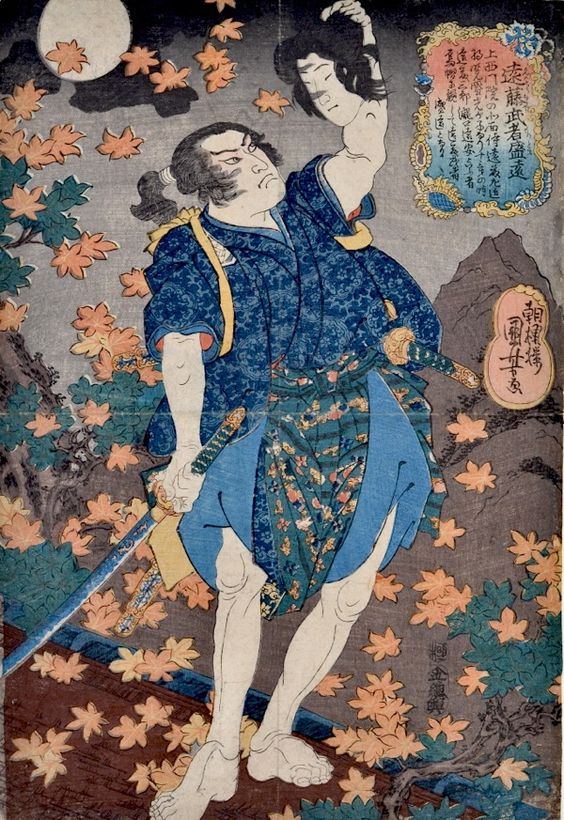
Head (生首; Namakubi)
I thought I’d save the best for last, if you could call it that, and end things with a bang or a chop because we’ll be ending with severed heads. Gore and barbarism aside, there’s actually more to it than being a creepy tattoo to freak people out. It’s a nod to the samurai practice of headhunting and symbolizes fearlessness. I mean, you’d have to be really brave to have something like this inked on your body where you’ll be seeing it all the time. Just when you thought the Oni Masks were shocking enough. Interestingly, it also conveys respect for a foe. I guess there really is honor among thieves? Of course, it’s also meant to scare people away. Anyone with a good head on his shoulders would most certainly keep his distance from a person with a tattoo of a severed head!
Are You Irezumi Ready?
Tattoos are a beautiful subject matter anywhere in the world, and Japan is no exception to this. The colorful history of Japanese tattoo culture, and the fact that it is so secretive and taboo, certainly add to its mysterious appeal.
Room a1-206, Shahu Tiandi, 192 Tinglan lane, Suzhou Industrial Park, Jiangsu Province +86(512) 67411171 18051210105 weijianan@nange-sz.com yanghui@nange-sz.com
©2026 nange3d.com All rights reserved.
The content of the website is protected by copyright. All documents and materials are copyrighted by Nange Digital Technology Co., Ltd. without the written permission of the company, it is not allowed to copy, modify or adapt in any way, including service signs, trademarks, and the signs or trademarks of subsidiaries or other companies in the form of words, graphics, logos and images. Use our website and services We do not mean that you have any ownership of our content.

